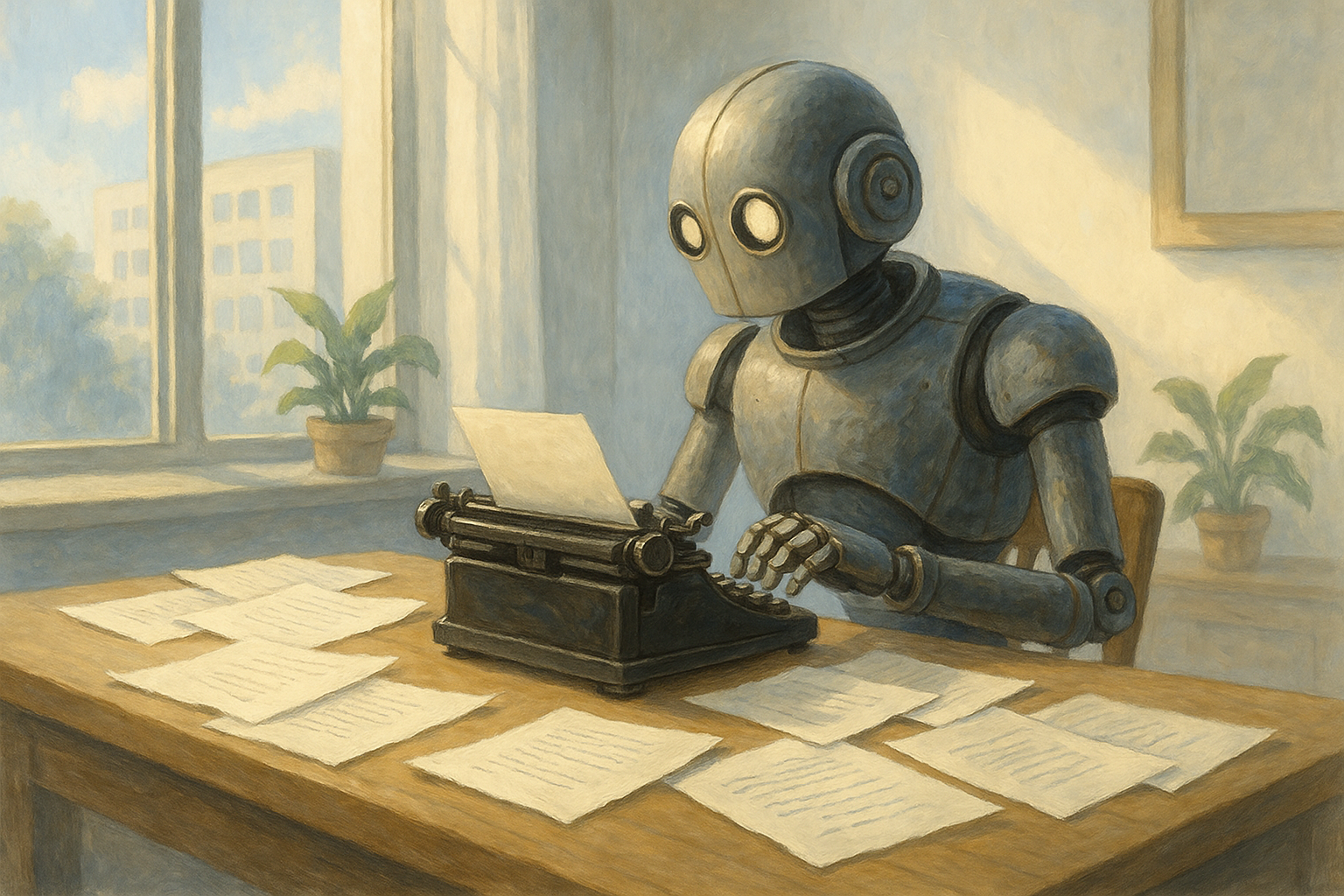
Picture a reader lost in a blog’s clever travel tips, chuckling at a product description’s charm, or skimming a news snippet as smooth as a river stone. The words dance across the screen, weaving stories that inform or delight. Yet, a curious secret hides in the digital weave: a growing share of online content–articles, social media posts, even reviews–is spun not by human hands but by algorithms with a knack for storytelling. The VibeCentral report on AI-assisted writing unveils this quiet revolution, where artificial intelligence plays the role of a silent scribe, crafting the internet’s tales with dizzying speed. This article explores AI’s rise in content creation, its impact on readers and creators, and the future of a web spun by algorithms, all with a playful nod to the magic of words.
The Digital Loom: AI’s Ascent in Content Creation
Once upon a time, writing was a human art–quills dipped in ink, typewriters humming, or bloggers tapping away under a midnight moon. Today, AI has slipped into the storyteller’s seat, transforming how the web’s pages are filled. The VibeCentral report reveals that AI tools are weaving content across industries like e-commerce, marketing, and journalism, spinning words faster than a spider crafts its web. Unlike human writers, who might toil for hours over a single piece, AI can churn out thousands of product descriptions or social media posts in mere minutes, feeding the internet’s endless appetite for fresh stories.
Businesses are enchanted by AI’s efficiency, as the report notes. E-commerce platforms conjure up product listings that align perfectly with brand voices, while marketers craft emails or blog posts tailored to specific audiences. A survey cited in the report found that 65% of digital marketers rely on AI tools to create social media updates, newsletters, or blog drafts. Imagine a bustling digital workshop where AI scribes work tirelessly, their algorithms humming like looms, weaving text that fills online shelves and feeds the ever-scrolling screens of readers worldwide.
This shift isn’t just about speed–it’s about scale. The report highlights how AI enables businesses to produce content in volumes that would overwhelm human teams. For example, an online retailer might use AI to generate descriptions for thousands of products, each crafted to entice shoppers with just the right tone. Small businesses, once limited by time or budget, now harness AI to compete with larger players, creating professional content that sparkles on the digital stage. This efficiency has made AI a darling of industries racing to keep up with the digital age’s demands, turning algorithms into the unsung heroes of the internet’s storytelling saga.
The Magic of Algorithms: Tools Behind the Tales
How does AI spin such compelling tales? The VibeCentral report explains that the magic lies in advanced language models powered by natural language processing (NLP). Tools like GPT-4 act like master weavers, analyzing context, tone, and intent to craft text that mirrors human writing–whether it’s a crisp product listing or a breezy blog post. Trained on vast tapestries of human text, these models can adapt to any style, from formal to friendly, making them versatile partners in the art of storytelling.
AI’s role isn’t limited to spinning tales from scratch. The report notes that 40% of content creators use AI as a “creative apprentice,” harnessing it to brainstorm ideas, sketch outlines, or polish drafts. Tools like Grammarly or SurferSEO add sparkle to human writing, refining clarity or optimizing for search engines. A Forbes article highlights how AI-driven SEO tools help content climb Google’s rankings by suggesting keywords or analyzing trends, like a compass guiding a ship through the digital sea. This partnership between human creativity and algorithmic precision crafts stories that shine brightly in the crowded online world.
Beyond creation, AI streamlines workflows in unexpected ways. The report describes how marketers use AI to generate variations of ad copy, testing which version captivates audiences best. Journalists might lean on AI to summarize data-heavy reports, turning numbers into narratives with ease. For instance, a newsroom could use AI to draft quick summaries of economic reports, freeing reporters to dig deeper into the story’s heart. This versatility makes AI not just a tool but a collaborator, helping creators weave richer, more efficient tales for readers to unravel.
The Ripple Effect: AI’s Impact on the Digital Landscape
AI’s storytelling prowess is reshaping the internet in profound ways. For businesses, the benefits are as clear as a starry night. The VibeCentral report notes that AI’s ability to produce high volumes of content at low cost has transformed industries like e-commerce, where product pages must be both informative and persuasive. A single AI tool can generate descriptions for an entire catalog, freeing human teams to focus on strategy or design. The report cites a survey where 70% of writers using AI reported higher productivity, as it handled repetitive tasks, leaving room for creative flourishes.
Readers reap rewards from this digital sorcery. AI-crafted content delivers instant information–think product reviews that appear the moment a new gadget launches or news summaries that keep pace with a fast-moving world. On platforms like X, AI-generated posts spark conversations, weaving threads of engagement that ripple across the digital pond. A TechCrunch article notes that AI-crafted social media content often captivates audiences with its timely, tailored charm, keeping the internet buzzing with fresh ideas. For example, a viral tweet about a trending topic might be crafted by AI, its words carefully chosen to resonate with the platform’s lively crowd.
This transformation extends to accessibility. The report underscores how AI empowers small businesses or solo creators to produce professional content without breaking the bank. A local café might use AI to craft engaging menu descriptions, while a freelance blogger could leverage it to draft outlines, saving time for deeper storytelling. This democratization of content creation lets more voices join the web’s chorus, weaving a richer, more diverse digital tapestry.
The Tangled Threads: Challenges of an AI-Written Web
AI’s rise isn’t without knots. The VibeCentral report highlights concerns about authenticity, as AI-generated text can sometimes feel like a well-stitched quilt–beautiful but lacking the unique imperfections of human craft. Readers might notice a certain uniformity in AI-crafted articles, as algorithms draw from patterns in their training data. This raises questions about whether AI can truly spin an original tale or merely remix existing threads.
Transparency weaves another challenge. The report cites a survey where 25% of consumers worry about not knowing whether content is AI- or human-written, fearing a loss of trust in the stories they read. A BBC article warns that undisclosed AI content could fuel misinformation, urging platforms to adopt clear labeling to keep the digital tapestry honest. Without such clarity, readers might wonder if they’re reading a human’s heart or an algorithm’s artifice.
Ethical concerns loom like storm clouds. AI’s ability to generate convincing text raises risks of misuse, such as crafting fake news or biased narratives that slip unnoticed into the web’s weave. The report underscores the need for ethical guidelines to ensure AI serves as a storyteller, not a trickster. For instance, an AI-generated article misrepresenting facts could spread rapidly, eroding trust. Publishers and platforms must tread carefully, balancing AI’s efficiency with the integrity of the stories they share.
The economic impact casts another shadow. The report notes a 15% decline in freelance writing opportunities in sectors like e-commerce, as businesses turn to AI for cost-effective solutions. For human writers, this feels like a fairy tale gone awry, where algorithms outpace quills and keyboards. Creators must now compete with machines that work faster and cheaper, raising questions about the value of human storytelling in an algorithm-driven age.
The Future Tapestry: Collaboration or Conquest?
What lies ahead for a web spun by AI? The VibeCentral report envisions a future where AI’s role grows, with tools becoming more sophisticated and woven into every corner of content creation. AI might craft everything from automated news summaries to personalized blog posts, each thread tailored to a reader’s tastes. Yet, the report emphasizes collaboration over conquest. AI is best suited for repetitive tasks–drafting product listings or summarizing data–while human writers bring depth, emotion, and originality to the tale.
Emerging trends sparkle with possibility. The report mentions multimodal AI, blending text, images, and video to create immersive experiences, like a travel blog that pairs vivid descriptions with AI-generated visuals of sunlit shores. Platforms like X might embrace AI-crafted interactive content, weaving text with real-time engagement to keep readers hooked. A Trusting News survey found that most respondents want AI use disclosed, suggesting platforms may adopt “AI-authored” labels to maintain trust, ensuring the web’s stories remain transparent.
Regulation and detection tools will shape this future. The report notes the rise of AI detection tools like GPTZero, though they sometimes misstep with false positives. Publishers may pair AI’s efficiency with human oversight to ensure accuracy and ethics, like a weaver checking each thread for strength. This balance will keep AI as a helpful scribe, not a rogue storyteller, in the internet’s evolving saga. For example, newsrooms might use AI to draft initial reports but rely on editors to verify facts, ensuring the story’s truth shines through.
A Guide for Readers and Creators
For readers, AI-crafted content is a double-edged quill. The VibeCentral report suggests they’ll enjoy faster access to information, from instant product reviews to news updates that arrive like lightning. Yet, discernment is key. Readers should verify sources, cross-reference claims with trusted outlets, or check a website’s credibility to navigate the AI-woven web without falling for a cleverly spun falsehood. A quick glance at a site’s “About” page or a search for corroborating sources can keep readers grounded.
Creators face a similar duality. The report highlights that 70% of writers using AI reported higher productivity, as it streamlined drafting, editing, or SEO tasks. AI can be a trusty apprentice, generating ideas or optimizing content to shine in search results. A blogger might use AI to draft an outline for a travel post, then infuse it with personal anecdotes that no algorithm could dream up. Yet, creators must cultivate a unique voice to stand out against algorithmic tales, blending human insight with AI’s efficiency.
AI also democratizes storytelling. Small businesses or solo creators can now craft professional content without vast resources. A local bakery might use AI to write menu descriptions that entice customers, while a freelance journalist could leverage it to summarize research, freeing time for deeper reporting. This accessibility lets more voices join the digital chorus, weaving a richer, more inclusive web.
A Tapestry of Tales
The internet is no longer just a human canvas; it’s a vibrant tapestry where AI and human threads intertwine, spun with speed and a hint of digital magic. The VibeCentral report illuminates this shift, showing how AI is transforming content creation while raising questions about authenticity, trust, and the value of human craft. As readers and creators navigate this landscape, they’ll find a world where algorithms spin tales alongside human storytellers, each adding to the web’s ever-growing story. The next time a blog post or tweet catches the eye, pause and wonder: was this woven by a person, or did a clever AI thread the words? The answer might just add a spark of enchantment to the digital scroll.